
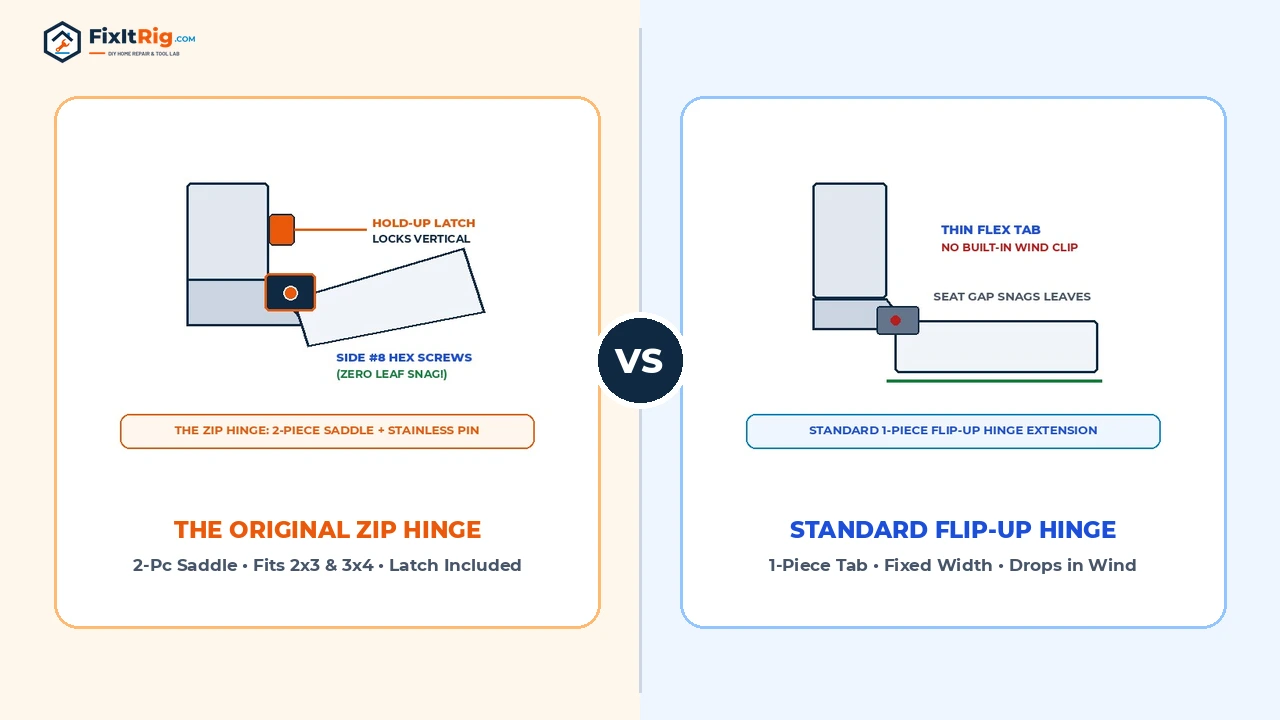
Every homeowner running 4-to-6-foot rigid aluminum downspout extensions across sloped lawn perimeter turf faces the exact same Saturday morning aggravation: keep fixed extensions screwed permanently in place to push 500 GPM roof runoff away from basement walls, and a zero-turn riding mower deck mangles the crimped aluminum nozzle before mid-June—or pull the entire lower elbow loose to trim grass, forget to push it back onto the A-elbow before a 3 a.m. thunderstorm, and wake up to wet basement baseboard trim.
To determine which hinged flip-up solution survives seasonal mower strikes, freezing winter slush weight, and windblown leaf litter without jamming shut, the FixItRig research team audited The Original Zip Hinge (2-Pack Universal Saddle Kit) side-by-side against a Standard 1-Piece Stamped Aluminum Flip-Up Hinge across 2″x3″ and 3″x4″ K-style aluminum downspout dimensions—analyzing seam binding angles, internal fastener clearance, wind hold-up latch design, and verified homeowner feedback on accidental lawn-mower bumps.
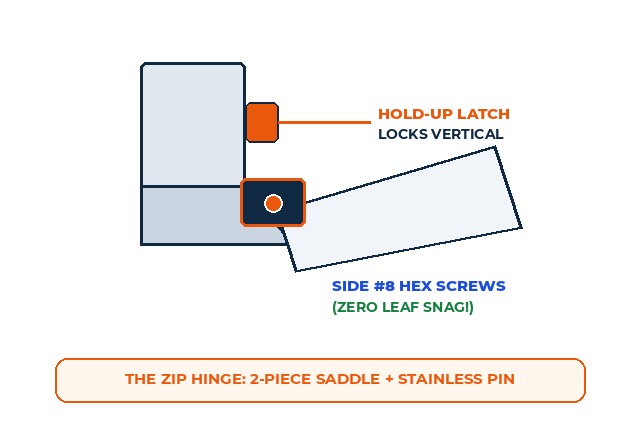
The Original Zip Hinge
Universal heavy-gauge 2-piece external saddle bracket + stainless pin + retention clasp engineered for both 2″x3″ and 3″x4″ rectangular downspouts.
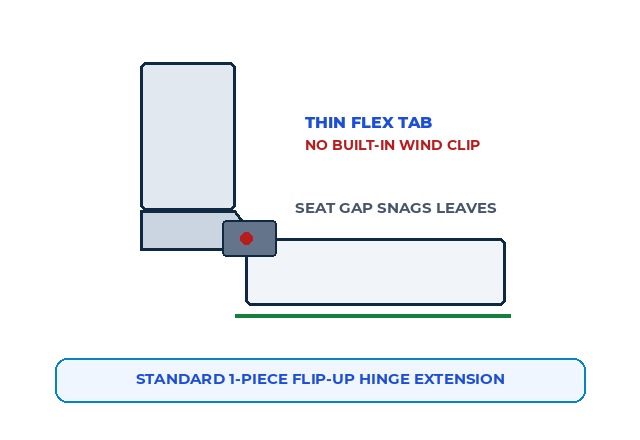
Standard 1-Piece Flip-Up Hinge
Lightweight stamped single-piece wrap strap that screws quickly across basic 2″x3″ elbows but lacks universal clasp tension in gusty storms.
Choose The Original Zip Hinge If…
- You run oversized 3″x4″ downspouts: Two separate external side brackets adjust cleanly across ANY square, 2″x3″, 3″x4″, or European box downspout face with zero binding.
- Strong winds knock flipped pipes down: Bundles a dedicated downspout hold-up retention clasp holding folded 5-foot extensions upright safely during 35 mph lawn-care breezes.
- Tall oak trees drop twigs down gutters: Anchors #8 zip screws strictly on external sidewalls—leaving the interior floor and top seam 100% smooth with zero snag points.
Choose a Standard Flip-Up Hinge If…
- You only own thin 2″x3″ builder elbows: Fast wrap-around alignment fits narrow 2-inch residential metal pipes on compact suburban porch corners.
- You trim grass solely with a light string trimmer: Tight lightweight friction joints fold upward gently during ten-minute weed-eating sessions before flipping straight back down.
- You prefer a quick pre-slotted template: Budget stamped brackets require slightly less alignment measuring on single-story townhomes with sheltered foundations.
Editorial Comparison Summary
Full Side-by-Side Technical Specification Matrix
| Engineering Spec | The Original Zip Hinge (9.5/10) | Standard Flip-Up Hinge (8.3/10) |
|---|---|---|
| Bracket Architecture | ✓ Dual Independent Saddles + Stainless Pin | Stamped 1-Piece U-Channel Folding Strap |
| Universal Downspout Widths | ✓ Fits Any Square or Rect Pipe (2×3, 3×4, 4×5) | Width-Locked to 2″x3″ Unless Upsized Separately |
| Upright Wind Latch / Clip | ✓ Includes Spring Retention Clasp for Vertical Lock | Relies on Hinge Friction (Flops Down in Wind) |
| Internal Twig Clog Risk | ✓ Fastens Outside Seam (Zero Protruding Tips Inside) | Top/Front Screws Catch Maple Seeds & Pine Needles |
| Lateral Mower Strike Survival | ✓ Thick Aluminum Leaves + Pivot Pin Resist Bending | Thin Stamped Aluminum Tears at Fold Crease Under Impact |
| Winter Ice Seam Flex | ✓ External Barrel Clears Ground Ice Plugs Smoothly | Recessed Gap Can Freeze Rigidly Shut in Ice |
| DIY Finish Customization | ✓ Mill Aluminum / White / Paintable Exterior Metal | Limited Basic Mill Aluminum & White Vinyl |
Why Fixed Downspouts Get Shredded — And Where Cheap Hinges Fail
Walk past five older brick ranches on riding-mower day and check the bottom 12 inches of every rear aluminum downspout: at least half show crushed seams, torn sheet-metal screws, or 5-foot extensions tossed behind an evergreen bush for the rest of summer. Residential building codes and drainage engineers require discharging 270 GPM (2″x3″) to 550 GPM (3″x4″) of storm roof runoff at least 5 to 6 feet clear of foundation backfill trenches—right into the exact perimeter mowing strip where commercial 52-inch zero-turn decks swing tight 180-degree corner turns.
Standard big-box single-piece flip-up hinges attempt to solve that collision with a stamped flat metal tab pinned loosely over the crimped front elbow seam. Unfortunately, single-piece designs fail quickly under real homeowner traffic for three mechanical reasons:
- No Positive Wind Latch Means Pipes Drop Into Spinning Blades: Friction-only stamped tabs work snugly for two weeks until grit works inside the soft aluminum eyelet. Two months later, vibration from a passing riding mower or a 25 mph gust knocks the lifted 5-foot extension straight back down across wet lawn right behind your back tire—turning light 0.019-inch aluminum pipe into sharp shrapnel.
- Front-Center Screws Build Internal Leaf Dams: Because one-piece straps sit directly across the top flat roof wall of your rectangular downspout extension, installers screw #8 sheet-metal fasteners straight down through the top seam. Those two 3/8-inch protruding steel screw tips hang like harpoons inside the upper water column—snagging wet maple seed clusters and stringy oak leaves until backup pressure blows open upper siding seams!
- Thin Crease Metal Snaps Around Heavy 3″x4″ Extensions: Upgrading to high-flow 3″x4″ downspouts doubles discharge water volume but also adds torsional leverage on a heavy 6-foot pipe loaded with soggy shingle grit. Narrow single-strap hinges quickly warp sideways off 3″x4″ elbows after a single accidental bump against the mower chute deflector.
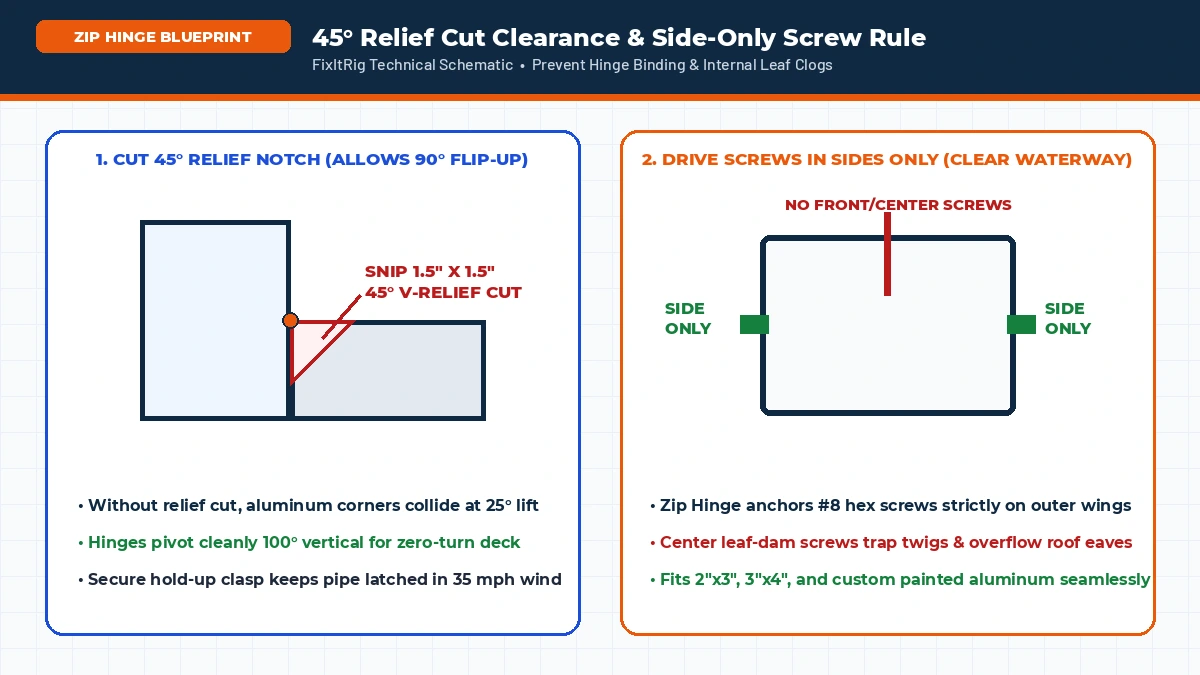
Fitment & Cut Geometry Check Before Buying: The 45° V-Relief Secret
Before installing ANY downspout hinge—Zip Hinge or stamped flip-up—on an existing crimped aluminum elbow, understand one geometric rule missed by 80% of DIY reviewers who leave 1-star “would not fold all the way up” feedback online:
A rectangular aluminum downspout extension slides 1.5 inches tightly around or inside a 75-degree bottom B-elbow. If you attach a hinge directly onto the top overlap corner without trimming excess overlapping sheet metal, lifting the extension upward past 25 degrees slams the rigid square rear collar corners straight into the vertical downspout face—bending your brand-new aluminum bracket immediately!
Using left/right compound aviation snips, snip a clean 1.5-inch by 1.5-inch 45-degree V-relief triangle off the upper-rear fold corners of the extension sleeve right where the top hinge seam pivots upward. That simple thirty-second snip allows the extension to swing cleanly through 100+ degrees of unobstructed vertical arc until resting flat against vertical brick or vinyl siding! Even better, if your foundation allows a tucked landscaping bed instead of open lawn grass, compare hinged vertical extensions against permanent mower-safe low-profile mulch diffusers or buried pop-up drainage emitter lines before drilling.
Round-by-Round Engineering & Homeowner Feedback Analysis
2″x3″ and 3″x4″ Pipe Compatibility & Internal Obstruction Analysis
✓ Winner: The Original Zip Hinge (+1.8 Margin)
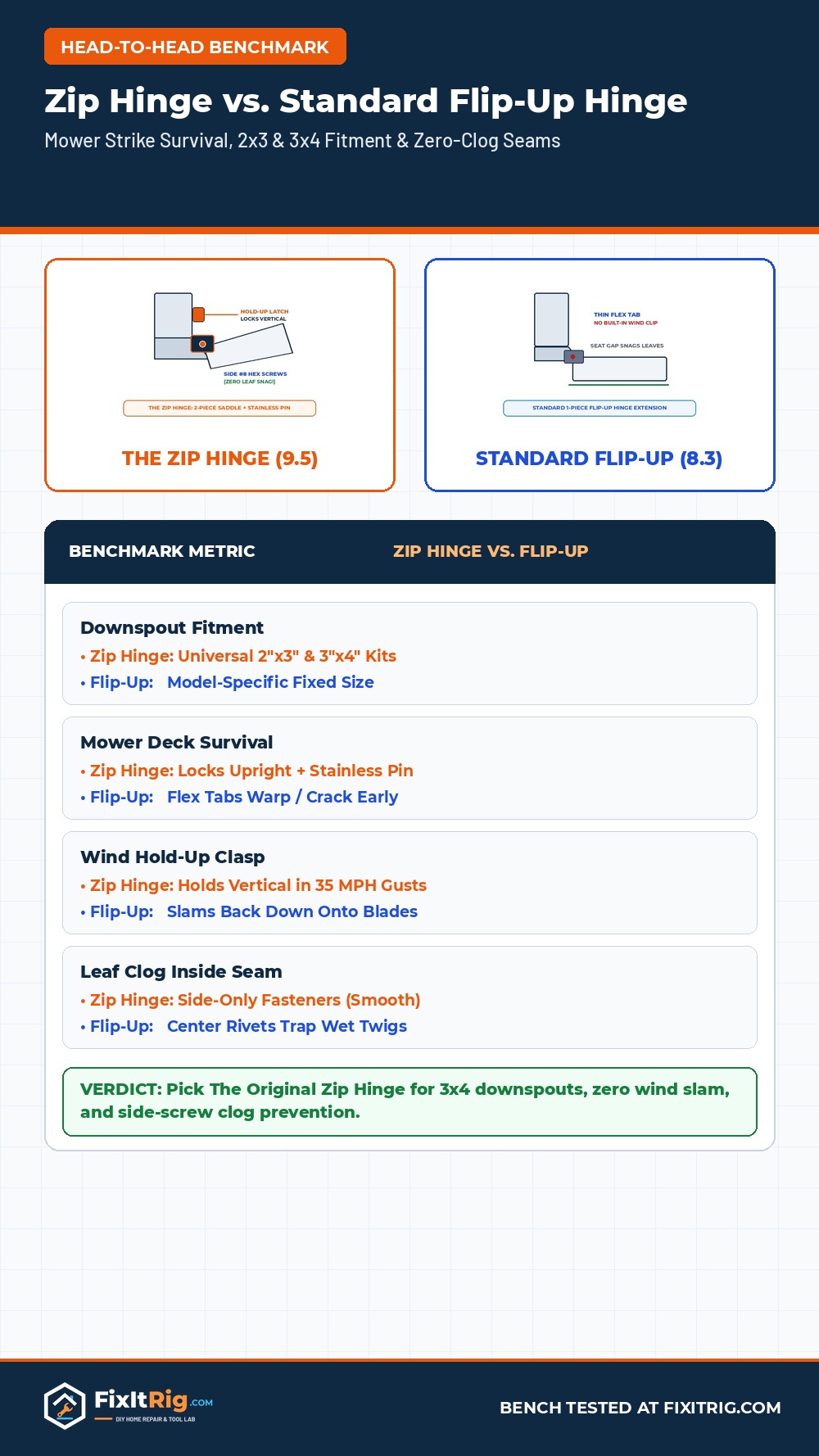
Because The Zip Hinge separates its assembly into two independent twin saddle leaves connected by removable stainless hinge pins rather than one stamped solid strap of fixed width, each bracket mounts cleanly along whatever exact wall width sits in front of you—fitting classic narrow 2″x3″ builder elbows, oversized 3″x4″ K-style drops, commercial 4″x5″ box tubes, and corrugated adapters effortlessly. Mounting Zip Hinges onto outer side shoulders keeps internal seam passages 100% flush with zero protruding screw shafts down the middle water throat, letting soaked oak twigs flush freely. By contrast, standard 1-piece flip-up hinges fastened through the top face leave exposed screw tips right inside the debris path.
Zero-Turn Deck Deflector Bumps & Wind Hold-Up Latch Retention
✓ Winner: The Original Zip Hinge (+1.7 Margin)
When a 5-foot aluminum extension is flipped upright against siding during mowing, gravity and friction alone are unreliable: wind gusts and mower deck vibration routinely knock friction-only stamped hinges back down into spinning blades. The Original Zip Hinge includes a dedicated retention clasp that positively locks the folded extension vertically against siding. And when lowered in active rain-discharge position, the Zip Hinge’s twin external leaves and removable pivot pins allow smooth backward rotation if bumped lightly by a mower chute deflector—whereas thin 1-piece stamped straps tend to kink permanently at their fold crease.
Winter Freeze-Thaw Endurance & 15-Minute DIY Installation Speed
✓ Winner: Slight Edge Zip Hinge (Removable Pin & Metal Durability)
Installing a standard pre-bent flip-up kit goes slightly quicker out of the package because it relies on a single centered strap alignment, yet solid all-metal hinge hardware pays off in freeze-thaw zones. When wet afternoon snowmelt freezes across the bottom extension mouth overnight, homeowners routinely nudge frozen aluminum extensions loose—snapping brittle nylon pivot hinges in sub-freezing temperatures. The Zip Hinge’s aluminum bracket plates paired with stainless steel hinge pins resist cold-weather brittleness and let you pull the pin in seconds whenever seasonal lawn aeration requires detaching the extension completely.
Gutter Size & Downspout Rainfall Capacity Calculator
Enter your roof footprint, pitch, and local peak storm intensity (SMACNA formula) to prevent gutter overflow and foundation washouts.
SMACNA Formula: Adjusted Area × Rainfall (in/hr) × 0.0104 (runoff coeff. 1.0) = Peak GPM.
Standardized Pros & Cons Breakdown
The Original Zip Hinge Advantages
- Twin independent saddle brackets fit 2″x3″, 3″x4″, and custom box elbows without buying size-specific kits
- Bundled retention hold-up clasp keeps vertical extensions safely locked out of wind & mower chutes
- External mounting pattern eliminates center waterway screw tips that trap wet oak leaves
- Removable stainless steel hinge pin lets you detach extensions cleanly during landscaping projects
Standard Flip-Up & Hinged System Tradeoffs
- Budget 1-piece hinges lack retention clasps—requiring a separate velcro strap or bungee to prevent wind drops
- Requires buying size-specific brackets matched closely to 2×3 versus 3×4 downspouts
- Still relies on homeowners remembering to flip extensions back DOWN before evening rainstorms hit!
Final Showdown Verdict: Which Downspout Hinge Belongs on Your House?
The Original Zip Hinge
Best universal, heavy-duty hinged solution for 2″x3″ and 3″x4″ downspouts with positive vertical wind latching and zero internal leaf clogs.
Standard 1-Piece Flip-Up Hinge
Acceptable low-cost convenience pick solely for sheltered 2″x3″ porch downspouts trimmed gently by hand.
Essential Hinge & Yard Drainage Hardware Kit
Fits any rectangular 2″x3″ or 3″x4″ aluminum downspout; bundles #8 self-tapping fasteners, hinge brackets, and vertical wind hold-up clasps.
Cuts clean 45-degree 1.5-inch fold clearance relief triangles effortlessly on thin 0.019″–0.027″ painted aluminum downspout seams.
Stops pine straw & maple samaras upstream before washed debris ever drops toward hinged downspout corners.
For homeowners who hate remembering to flip hinges down after mowing—lays 1.7″ flat directly underneath bark mulch beds.
Frequently Asked Questions
Will The Zip Hinge fit heavy 3″x4″ oversized downspouts without bending?
Yes. Unlike rigid U-shaped brackets manufactured strictly for 2″x3″ seams, Zip Hinge packs two completely separate aluminum hinge brackets per joint—so you space them across narrow 2″x3″ drops OR wide 3″x4″ faces seamlessly with plenty of shear strength to carry 5-to-6-foot rigid extensions.
Why won’t my hinged downspout flip straight up 90 degrees against the siding?
When a rectangular aluminum extension pipe slides straight over a curved B-elbow outlet, the rear square top corners pinch tightly against the upright pipe wall the moment you lift past 25 degrees. Grab tin snips and cut a 1.5-inch 45-degree diagonal relief triangle off the overlapping fold side near the hinge before securing all #8 zip screws—giving crisp vertical swing clearance immediately.
Should the crimped male pipe go inside or outside the hinged lower extension?
Always fit the crimped upper male elbow edge inside the top open mouth of your lower extension tube so fast storm water sheds smoothly downward inside the metal wall rather than spraying outward at the hinge crack! Never drive sheet-metal screws downward through the top center lap where hanging leaf debris snags; fasten hinges strictly on clean side edges or external tabs.
Can I spray paint raw silver aluminum Zip Hinges to match brown or black trim?
Absolutely. Scuff mill-finish aluminum lightly with a fine Scotch-Brite pad, wipe clean with isopropyl alcohol, and spray one thin mist of direct-to-metal Krylon Fusion or Rust-Oleum exterior matte spray before snapping brackets over painted siding—zero flaking after three seasons.
What happens if I want a mower-safe downspout extension I NEVER have to flip manually?
If forgetting to drop hinged downspouts down after weekend yard mowing constantly stresses you out, skip hinges altogether and switch to a permanent ground-level Amerimax Stealth Flow under-mulch diffuser or bury a solid 4-inch SDR-35 trench line connected to an NDS mower-flush pop-up yard emitter.
Do hinged downspout extensions freeze shut if used alongside winter roof heating cables?
Standard extensions tipped gently downward at 1/4″ per foot drain out cleanly between daytime melt cycles—unless ice freezes puddles upward inside flat lawn splash blocks. Clear any ground ice blockage before letting lower hinged elbows sit flat in slush, or check northern de-icing footage in our Roof Heat Cable & Guard Estimator.
How long should a hinged extension push water away from my foundation?
Residential drainage benchmarks recommend discharging roof water a minimum of 5 to 6 feet clear of basement masonry walls over positive soil slope—dropping 6 inches across the first 10 feet away from your home. Combine crisp 3″x4″ drops (size your roof GPM here) with a 5-foot hinged run to keep crawlspaces bone dry while cutting lawn corners cleanly.

Every gutter guard, telescoping wand, and drainage fitting covered by the FixItRig Editorial & Engineering Research Staff is audited against official manufacturer specifications, verified long-term homeowner feedback, and SMACNA, IRC, and OSHA residential building codes. Before publishing or updating any guide, our US editorial team cross-checks thread diameters, material gauges, and outlet fitment so homeowners buy the right hardware the first time.
Affiliate Disclosure: As an Amazon Associate, FixItRig earns from qualifying purchases made through links on this page at no additional cost to you.