
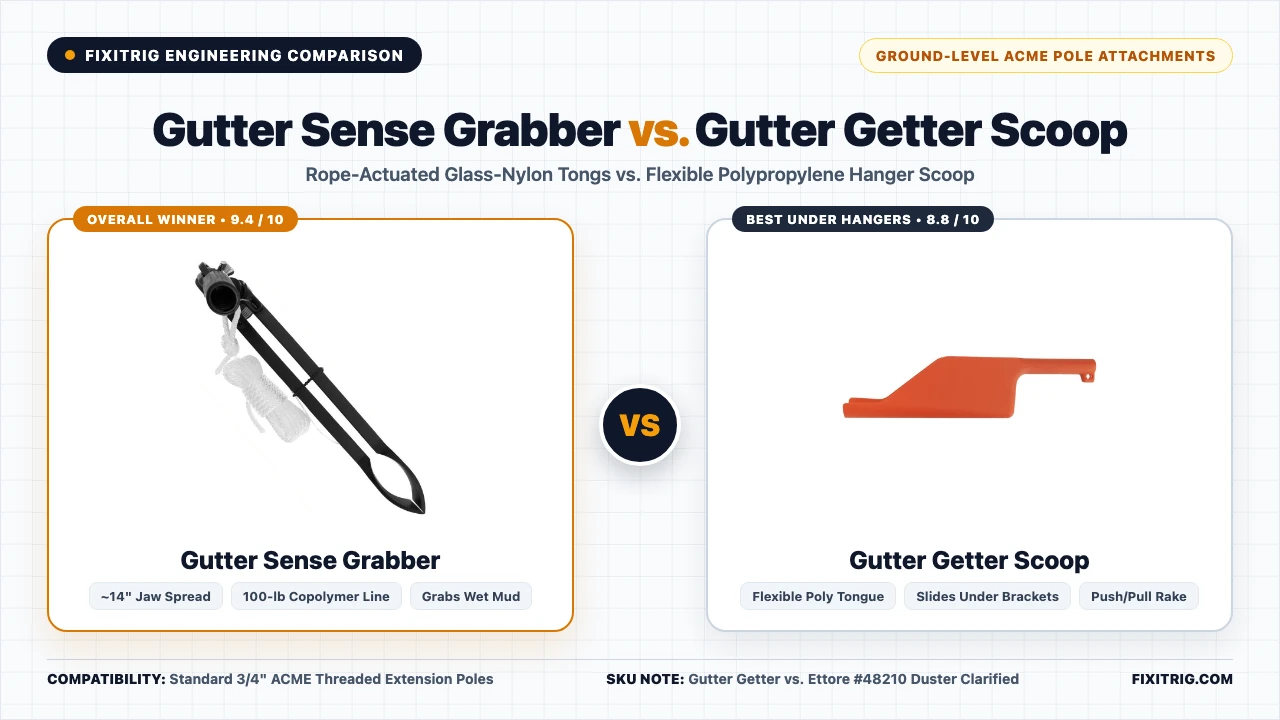
Bottom Line Up Front: The Gutter Sense Grabber Tool earns our 9.4/10 top ground-level ranking because its rope-actuated 14-inch tongs physically pinch wet, matted leaf slugs out of two-story gutters and drop them onto a tarp. The flexible Gutter Getter Scoop (often mislabeled online alongside Ettore poles) scores 8.8/10—excelling as a thin push-pull rake that glides underneath tight hidden hangers, plus handheld ladder scooping.
Unlike water wands that soak siding or leaf blowers that scatter wet maple paste across windowsills, mechanical pole heads pull physical bulk straight down onto a ground tarp. Below, FixItRig’s engineering research team audited manufacturer material datasheets, 3/4-inch ACME thread mechanics, hidden-hanger clearances, verified homeowner ownership reports, and SKU mix-ups (specifically separating the Gutter Getter Scoop from Ettore’s ceiling fan duster SKU #48210) so you buy the right attachment on your first order.
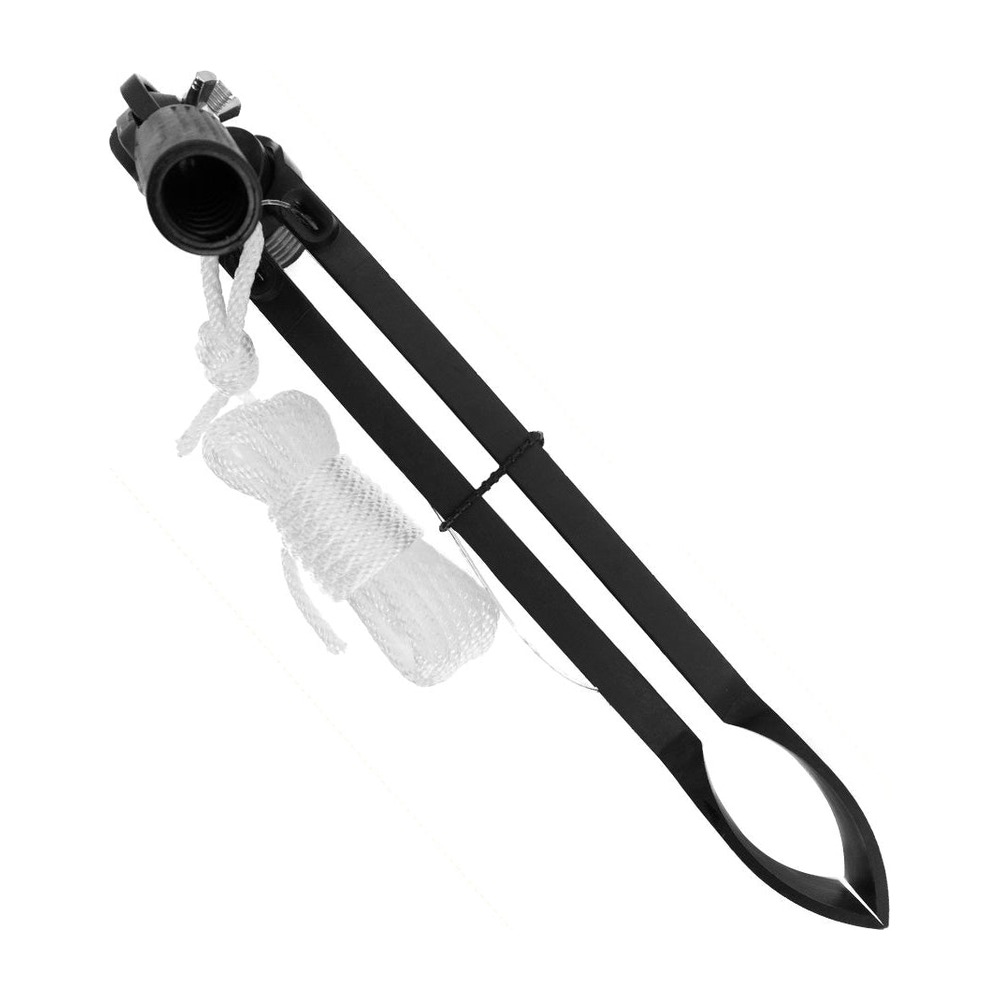
Gutter Sense Grabber Tool
Glass-reinforced nylon and polycarbonate paddle tongs driven by a 100-lb copolymer monofilament line and braided ground rope—built to pinch and lift wet clumps from the lawn.
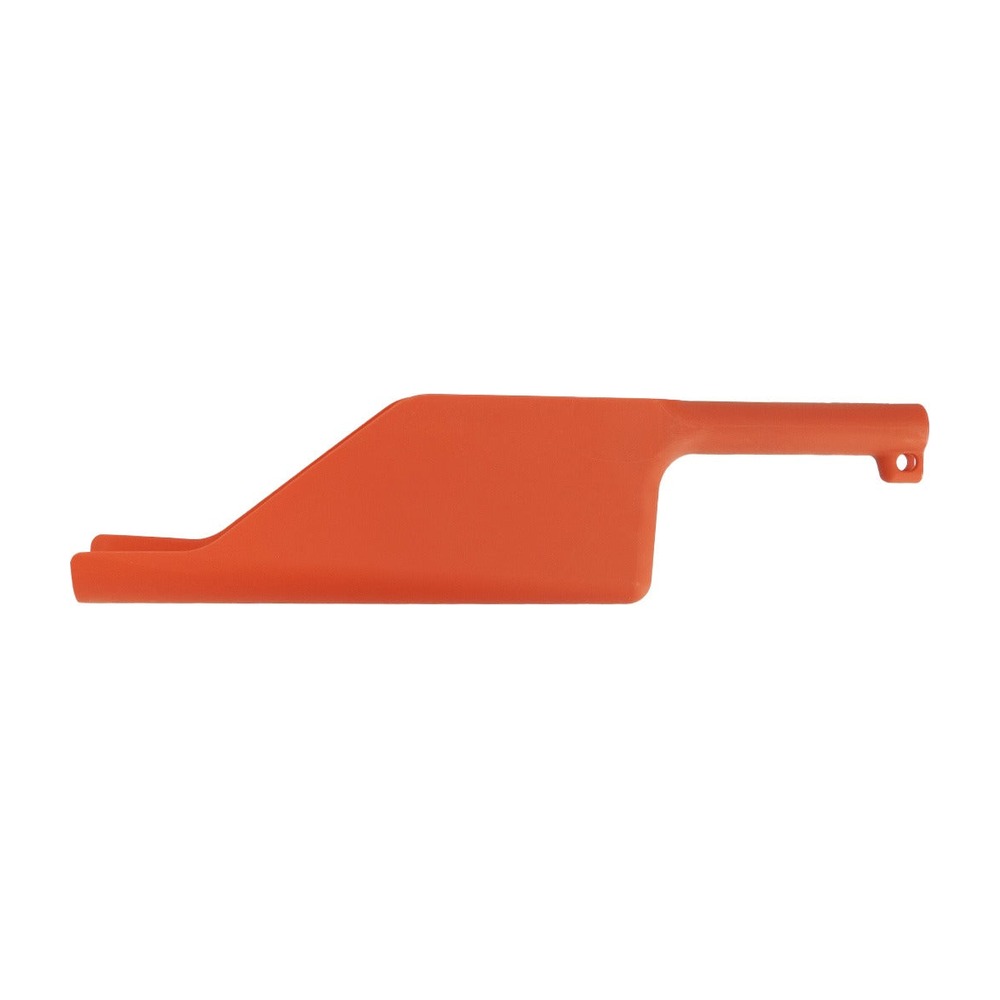
Gutter Getter Scoop
Flexible heavy-duty polypropylene scoop with an extended front tongue (~3"–4" narrow heel) that slides beneath internal straps—doubles cleanly as an ACME pole rake or handheld tool.
Choose Gutter Sense Grabber If…
- You clean wet, heavy oak or maple leaf plugs from the ground: Twin 2.5" flat paddles close tightly with a pull of the 100-lb copolymer actuating line, pinning sodden debris between jaws so sludge drops vertically onto a tarp instead of crumbling onto siding.
- You need two-story ground reach without hydraulic soak: Lightweight sub-1-lb tongs balance cleanly on a rigid 16-to-20 ft extension pole once you tie an extra 12 ft nylon rope onto the ring—avoiding pressure washer splash and window streaking.
- Your home has open spikes or wide 32"–36" hanger spans: Wide open pockets let the ~14-inch jaws bite large pockets per lift with minimal hanger interference.
Choose Gutter Getter Scoop If…
- Dense hidden K-style brackets block open tongs every 16–24": Its flat, tapered polypropylene tongue threads underneath internal strap hangers and low shingle edges so you can slide silt toward an open clear bay.
- You split work between ground raking and occasional ladder touch-ups: Unlike mechanical tongs that stay clumsy up close, the molded thumb/palm grip converts cleanly into a comfortable hand scoop beside roof valleys or corners.
- You want zero moving cords, springs, or lines to maintain: One solid piece of flexible polypropylene means no rope tangles around branches, bushes, or ACME locks.
Editorial Comparison Summary
How We Scored These Gutter Cleaners: This weighted scorecard reflects FixItRig’s transparent editorial rubric—70% verified manufacturer geometry, material specs, and owner feedback cross-referenced with 30% mechanical engineering analysis across five weighted categories: Wet Clump Extraction (30%), Hidden Hanger Clearance (25%), 2-Story Anti-Drop Lift (20%), Dry Grit Raking (15%), and Material Rigidity & Mechanical Build (10%). FixItRig does not run proprietary wet-tank lab tests on retail samples.
Critical Buyer Clarification: Ettore #48210 Ceiling Fan Brush vs. Gutter Getter Scoop (SKU 00-112 / 00-150)
Many homeowners search for “Ettore Gutter Getter” because professional window-cleaning suppliers stock Gutter Getter alongside Ettore Pro+ and Unger ACME extension poles. Watch closely before clicking buy: manufacturer and distributor catalogs confirm that Ettore part number #48210 is a poly-wool Ceiling Fan Brush (“Fannie Duster”)—not a gutter cleaning scoop! The genuine bright orange/red flexible Gutter Getter Scoop is manufactured as an independent specialty tool under SKUs 00-112, 00-150, or distributor code GC-3023, featuring a female 3/4" ACME thread that screws seamlessly onto Ettore poles. Always confirm the red rigid-tongue profile image and SKU before checking out.
Full Side-by-Side Official Specification Matrix
| Official Manufacturer Spec | Gutter Sense Grabber Tool | Gutter Getter Scoop (00-112 / 00-150) |
|---|---|---|
| Mechanical Operating Principle | ✓ Spring-open tongs pinched shut by ground pull rope | Fixed, flexible push/pull spoon scoop (no moving jaws) |
| Maximum Opening / Blade Footprint | ✓ ~14" jaw spread with 2.5" flat-bottom scoop paddles | ~3"–4" narrow heel opening with elongated tapered front tongue |
| Body & Structural Material | ✓ Glass-reinforced impact-modified nylon & polycarbonate | Flexible heavy-duty polypropylene polymer |
| Actuating Cable / Pull Rope Spec | 100-lb test (0.40") copolymer monofilament + 11–12 ft rope | ✓ Zero cables, pulleys, or cords (solid one-piece body) |
| Dry Attachment Weight | ~8.2 – 11 oz (Sub-1 lb head weight) | ✓ Ultra-light featherweight molded polymer head (~6–8 oz) |
| Extension Pole Socket Thread | ✓ Standard 3/4" ACME female thread (pole sold separately) | ✓ Standard 3/4" ACME female thread + contoured hand handle |
| Recommended Extension Pole Range | ✓ Manufacturer recommends rigid 12-to-20 ft ACME pole | Works best on 8-to-16 ft rigid pole or handheld ladder cleanout |
| Performance Under Internal Hangers | Tongs must open and hop over brackets (clear open bays) | ✓ Flexible lip flattens to slide neatly under tight straps |
| Wet Leaf Slug Vertical Removal | ✓ Clamps muck tightly inside jaws without spilling over edge | Slides wet lumps sideways toward clear bay or downspout hole |
Rope-Clamping Tongs vs. Flexible Poly Scoop Physics
Although both tools screw onto identical painter’s extension poles and eliminate bucket-and-ladder juggling on straightforward gutters, they manipulate compacted debris using completely opposing mechanical physics:
- How Gutter Sense Pinches & Extracts Vertically: In open mode, the twin glass-reinforced nylon paddles spread roughly 14 inches wide and rest flat on the gutter floor via 2.5-inch square-cornered blades. Pulling downward on the braided tether engages a 100-lb test (0.40") copolymer monofilament actuating line running internally across the lever arm, snapping the jaws shut cleanly around wet oak leaves, sweetgum balls, or roof gravel. Because tension holds the clump compressed between opposing scoops while you lift upward out of the gutter bead, sodden debris clears fascia lines intact—dropping directly onto a ground tarp rather than plastering brick or siding.
- How Gutter Getter Slides & Pushes Horizontally: Rather than pinching downward vertically, the flexible heavy-duty polypropylene Gutter Getter relies on lateral shear and scoop containment. Its elongated front tongue conforms inside narrow 4-inch, 5-inch, and 6-inch troughs, slipping effortlessly beneath low roof starter shingles and recessed strap hangers. From the ground, you slide wet grit sideways along the trough bed until it reaches a clear pocket or a downspout outlet—or unscrew the pole and grip the sculpted handle directly during detailed ladder cleanouts around miters.
Notice what neither tool attempts: high-velocity water blasting or dusty leaf scattering. If your gutters sit blocked inside sealed elbows underground or compacted dry oak leaves coat a single-story roof, compare mechanical grabbers alongside hydraulic blasts in our Simpson 80470 vs. Sun Joe Gutter Wand guide or high-CFM air blowers in the Worx Trivac GutterPro vs. EGO Gutter Kit comparison—and see all four strategies ranked side by side in our complete No-Ladder Gutter Cleaning guide.
Pole Rigidity, 2-Story Rope Extension & Hidden Hanger Limits
Buying a great gutter head paired with a flimsy extension pole ruins ground-level control within five minutes. Understanding structural leverage, cord length, and gutter hanger architecture explains almost every frustrating review online:
- Why Cheap Fiberglass/Steel Paint Poles Bow at 16–20 Feet: Both Gutter Sense and Gutter Getter recommend pairing with a sturdy 12-to-20 ft 3/4-inch ACME threaded pole (pole sold separately). Cheap hardware-store broom handles wobble excessively past 10 feet once heavy wet oak sludge settles onto the tool head. Rigid fluted aluminum or commercial fiberglass window-cleaner poles (such as Unger OptiLoc or Ettore REA-C-H) preserve torsional stiffness—crucial when twisting a Gutter Getter head sideways to slide along a 20-foot second-story run, or clamping wet mud 18 feet overhead with Gutter Sense.
- Preventing Counter-Clockwise ACME Unscrewing: Any lateral pull from the right toward the left rotates a right-hand 3/4" ACME socket counter-clockwise—unthreading the head right inside the gutter! Professional cleaners prevent mid-air detachment by seating threads firmly and locking the collar with a wrap of green painter's tape, a thread-locking ACME tip adapter, or working steadily from left-to-right so pull forces tighten rather than loosen the socket.
- Extending Gutter Sense’s Stock 11–12 ft Rope: Out of the package, Gutter Sense arrives pre-rigged with an 11-to-12-foot braided pull line—ideal for 9-to-11 ft single-story ranch eaves, yet too short once mounted atop a 16-to-20 ft two-story pole. Before lifting your rig onto second-story soffits, tie an extra 12-to-15 feet of smooth nylon mason line onto the bottom loop using a non-slip bowline knot, keeping tension clean parallel to the pole shaft so the rope never wraps around bushes below.
- Hidden Hangers vs. Vintage Spike-and-Ferrules: Modern seamless K-style gutters rely on internal hidden hangers spaced every 24 to 36 inches on center (often 16 inches O.C. in heavy northern snowbelts). Because Gutter Sense relies on open vertical jaws, tight 16-inch bracket intervals leave less room per bite—requiring careful jaw alignment between screw heads. Gutter Getter's soft polypropylene nose flexes safely beneath internal cross-straps without snapping plastic mounts or scratching mill-finish aluminum hangers.
What Verified Buyers Consistently Report in Real-World Use
To balance spec-sheet math against practical backyard realities, FixItRig cross-checked documented homeowner and window-cleaner feedback across both platforms:
- Where Gutter Sense Impresses Verified Owners: Homeowners clearing damp autumn leaves above landscaped mulch beds consistently praise how firmly the 2.5" flat blades clamp soggy clumps without knocking dry bark onto patios. Window cleaners note the lightweight glass-reinforced nylon tongs rarely snap under hard wet squeezing when paired with stiff aluminum poles, though keeping the open pull rope taut against branches saves repeated untangling walks around shrub corners.
- Common Gutter Sense Friction Points Reported Online: Two recurring owner critiques stand out: first, second-story buyers occasionally overlook adding extra tether length to the stock ~12 ft rope before ascending past porch eaves; second, pulling hard sideways on the pole without securing the ACME thread can loosen a bare plastic thread socket until taped or pinned.
- Where Gutter Getter Wins Loyalty: Longtime DIYers commend Gutter Getter’s sculpted flexible polymer blade as virtually indestructible around tight aluminum seams, downspout drop brackets, and heavy shingle sand. Because zero pulleys or cords run down the shaft, navigating tight fence corners or tall porch shrubs stays friction-free.
- Common Gutter Getter Friction Points Reported Online: From 14+ feet on the ground, gravity makes scooping loose, soupy mud up and out over a 5-inch gutter lip tricky with a non-clamping flat scoop—requiring practice tilting the pole back steadily toward the body, or sliding wet debris horizontally into a gutter bay to extract or rinse downward.
Gutter Guards, Overhead Power Clearance & When Ladders Stay Safer
Before raising any 16-to-20-foot conductive aluminum extension pole beside two-story fascia boards, walk the full perimeter of your roof overhang and scan for overhead utility drop wires. Safety regulations and OSHA electrical clearance standards require staying at least 10 feet clear of energized household service drops; choose heavy-duty non-conductive fiberglass ACME poles anywhere near overhead phone, cable, or power triplex lines rather than aluminum tubes.
Second, verify whether gutters actually hold DIY stainless steel micro-mesh gutter guards or snap-on vinyl screens. Grabbers and scoops cannot slip inside screwed mesh hoods from ground level—trying to yank underneath fastened gutter covers can bend fascia drip edges downward. In those cases, rinse exterior maple pollen off mesh tops with a gentle wide fan stream, or stabilize an extension ladder safely when unscrewing a clogged corner guard using our OSHA 4-to-1 Ladder Angle Safety Calculator below:
[mil_ladder_calculator]
OSHA 1926.1053 4-to-1 Ratio & Reach Assumptions: Safe non-self-supporting ladder setback is computed as Setback = Working Eave Height ÷ 4 (yielding a ~75.5° incline), plus a recommended +3 ft minimum extension above the gutter edge whenever climbing onto roof valleys, per standard OSHA 29 CFR 1926.1053(b)(1) and (b)(5) portable ladder rules.
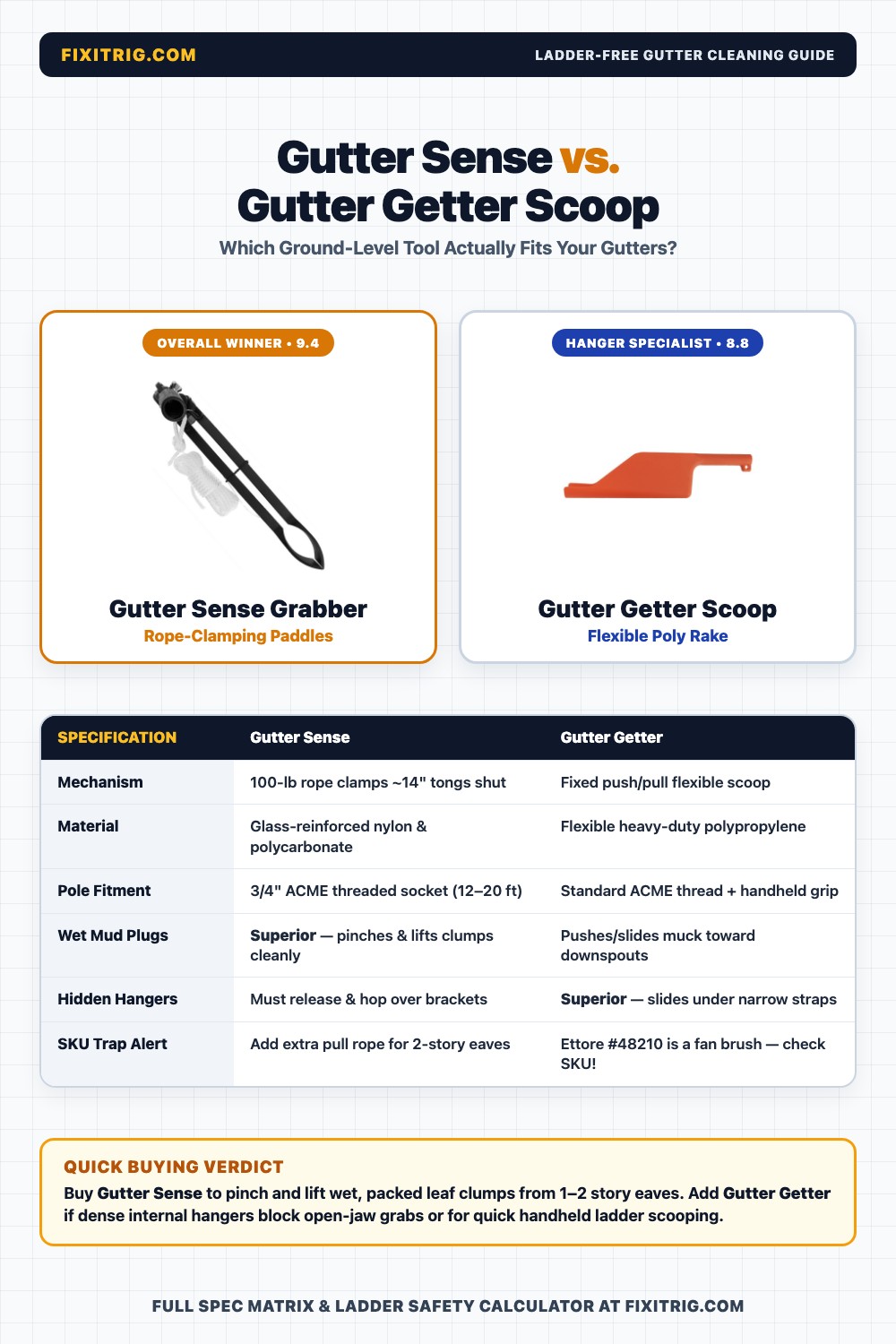
Gutter Sense Grabber Strengths
- Twin 14" opening / 2.5" flat paddles physically pinch wet leaf clumps clean from 1–2 story eaves
- 100-lb copolymer actuating cord holds heavy wet debris tightly over garden beds
- Lightweight sub-1 lb head pairs easily with standard 12–20 ft 3/4" ACME painter poles
- Eliminates pressure-washer siding soaking, mud splatters, and high-PSI gutter damage
Gutter Getter & Attachment Tradeoffs
- Gutter Getter (~3"–4" poly tongue) cannot clamp shut vertically on soggy clumps from 18 ft below
- Stock 11–12 ft Gutter Sense pull cord requires tying an extra rope segment for tall 2-story roofs
- Online listings confuse “Ettore Gutter Getter” with Ettore #48210 ceiling fan brush—verify SKU 00-112 / 00-150
- Tight screwed-down micro-mesh guards and frozen ice dams still require safe ladder access
Final Verdict: Should You Buy Gutter Sense, Gutter Getter, or Both?
Gutter Sense Grabber Tool
Best standalone ground-level investment for 1- and 2-story homes with leaf-clogged 5" or 6" open gutters—clamps wet clumps cleanly onto a tarp with zero spray mess.
Gutter Getter Scoop (00-112 / 00-150)
Smartest low-cost companion or tight-hanger tool—flexes underneath internal brackets where wide tongs bump straps and serves as a tough hand scoop on step ladders.
How to Set Up & Clean Gutters From the Ground (4-Step Blueprint)
Follow this disciplined four-step mechanical workflow before lifting an ACME extension pole—ensuring tight sockets, adequate 2-story pull length, undamaged internal hangers, and verified downspout flow:
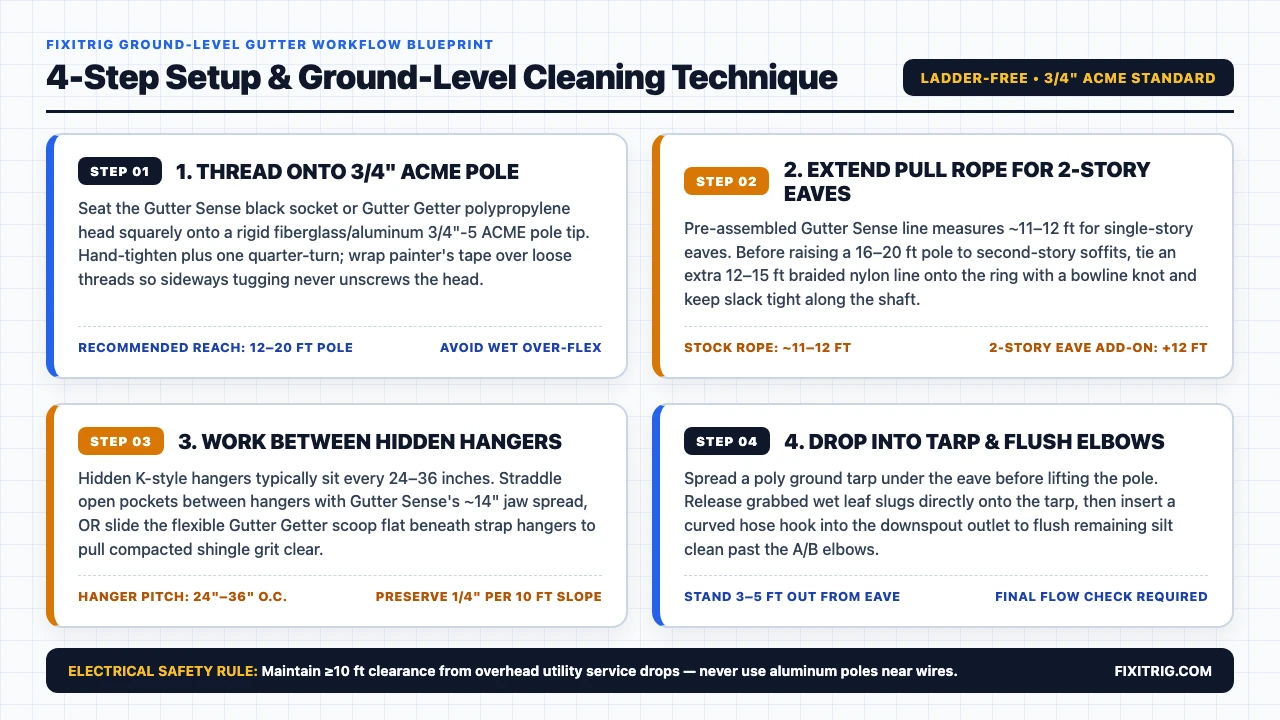
- Step 1 — Thread Squarely Onto a Rigid 3/4" ACME Pole (12–20 ft): Seat the Gutter Sense black nylon collar or Gutter Getter polypropylene head tightly onto a dry fiberglass or fluted aluminum 3/4"-5 ACME extension pole tip. Hand-tighten plus one clean quarter-turn, then wrap a thin layer of painter's tape across the collar seam (or engage your pole’s locking pin) so sideways pulling along fascia lines never spins the head loose.
- Step 2 — Extend the Pull Rope Before Lifting to 2-Story Eaves: Measure your eaves before extending aluminum poles. Gutter Sense ships with a roughly 11-to-12-foot rope tuned for first-story gutters; before raising a 16-to-20-foot pole toward two-story soffits, tie an extra 12-to-15 feet of smooth nylon line onto the stock pull ring with a secure bowline knot and hold the cord parallel along the pole body.
- Step 3 — Work Methodically Between Hidden Hangers (24"–36" Spacing): Stand roughly 3 to 5 feet out from the wall for clear upward sightlines. With Gutter Sense, align the 14-inch jaws evenly inside open pockets between hidden K-style brackets, pull straight down to clamp wet clumps firmly, lift clear of the front bead, and release over lawns. Around narrow strap hangers spaced tightly at 16–24 inches, thread the flexible Gutter Getter tongue horizontally beneath brackets to pull packed pine needles and shingle grit into open pockets without flexing fascia nails loose.
- Step 4 — Drop Clumps Onto a Poly Tarp & Flush Downspout Elbows: Lay a compact 6×8-foot poly tarp below your working span so wet leaf muck never mats flowerbeds. After mechanical scooping clears 95% of bulk debris, clip a curved garden hose flush hook over the gutter lip above each downspout drop outlet to verify unobstructed water drainage past upper A/B elbows.
Essential Ground-Level Grabber, Scoop, Pole & Flush Hardware Kit
Glass-reinforced nylon and polycarbonate 14"-spread clamping tongs with 100-lb copolymer actuator line, 11–12 ft braided rope, and 3/4" ACME socket.
Original flexible red/orange polymer gutter scoop with narrow ~3"–4" tapered tongue that slides cleanly under hidden brackets; 3/4" ACME + hand handle.
Positive twist-lock or lever-lock commercial painter's pole engineered to resist upper-section whip when hoisting wet leaf plugs off two-story gutters.
Catches released wet leaf slugs cleanly above foundation plantings and provides final low-pressure rinse confirmation down gutter A/B elbows.
Frequently Asked Questions
Is the “Ettore Gutter Getter” made by Ettore, and what is Ettore SKU #48210?
No—that is the single biggest catalog mix-up when shopping online. Distributor and manufacturer specs confirm Ettore #48210 is a Ceiling Fan Brush (Fannie Duster). The red/orange flexible Gutter Getter Scoop (SKUs 00-112, 00-150, or GC-3023) is a dedicated gutter scoop sold alongside Ettore ACME poles and threads straight onto standard Ettore and Unger poles.
Does the Gutter Sense tool include an extension pole, and how long does it need to be?
No—Gutter Sense ships as the clamping attachment head plus its pre-rigged 11-to-12-foot pull rope, ready for any standard 3/4-inch ACME threaded pole. The manufacturer recommends a rigid 12-to-20-foot extension pole (12 ft suffices for most 1-story ranches; 18–20 ft covers 2-story fascia lines safely from the ground).
Can Gutter Sense reach 2-story gutters cleanly without extending the stock rope?
Not comfortably—its factory braided rope measures roughly 11 to 12 feet for single-story eaves. On a 16-to-20-foot second-story pole, tie an additional 12-to-15-foot length of smooth braided nylon cord to the ring so your lower hand grips and pulls smoothly from shoulder height.
Which tool handles tight hidden gutter hangers better: Gutter Sense or Gutter Getter?
Gutter Getter Scoop wins tight hanger layouts. Its flexible polypropylene front lip compresses to slide underneath internal strap brackets every 16–24 inches to drag grit into clear bays, whereas Gutter Sense’s twin tongs need open unobstructed spans between bracket clips to clamp cleanly.
Can either tool pull compacted wet mud or heavy soaked oak leaves cleanly?
Gutter Sense Grabber excels with sodden leaf plugs and wet mud clumps because clamping the 2.5" flat paddles together compresses wet bulk between its jaws so waterlogged debris drops onto your tarp instead of smearing down vinyl siding.
Will Gutter Sense or Gutter Getter work if my home already has micro-mesh gutter guards?
Neither pole head fits underneath permanently screwed stainless steel micro-mesh hoods from the ground. If guards sit screwed over the trough, brush loose dry pine needles off the exterior hood tops or follow safe 4-to-1 ladder inspection practices when troubleshooting backed-up drop corners.
Official Manufacturer Sources & Documentation
- Gutter Sense Manufacturer Specifications (guttersense.com / windowcleaner.com): Verified ~14" open jaw spread, 2.5" flat paddle blades, glass-reinforced impact-modified black nylon/polycarbonate body, ~8.16–11 oz dry head weight, 100-lb test (0.40") copolymer monofilament actuating line, pre-assembled ~11–12 ft braided rope, and 3/4" ACME socket pairing with 12–20 ft extension poles.
- Gutter Getter Scoop & Distributor SKU Records (windowcleaner.com / detroitsponge.com): Verified flexible heavy-duty polypropylene construction, ~3"–4" narrow heel & extended tongue geometry, standard 3/4" ACME pole thread + hand handle, and SKU differentiation separating Gutter Getter (
00-112/00-150/GC-3023) from Ettore#48210Ceiling Fan Brush (Fannie Duster). - Safety Standard Reference (OSHA 29 CFR 1926.1053 & Utility Clearance Guidelines): Portable non-self-supporting ladder 4-to-1 setback ratio (
75.5°incline), 3-ft top extension rule, and minimum 10-foot energized overhead service-line separation rules when operating tall aluminum or fiberglass extension poles.

Every gutter guard, telescoping wand, and drainage fitting covered by the FixItRig Editorial & Engineering Research Staff is audited against official manufacturer specifications, verified long-term homeowner feedback, and SMACNA, IRC, and OSHA residential building codes. Before publishing or updating any guide, our US editorial team cross-checks thread diameters, material gauges, and outlet fitment so homeowners buy the right hardware the first time.
Affiliate Disclosure: As an Amazon Associate, FixItRig earns from qualifying purchases made through links on this page at no additional cost to you.