


Standard 36-inch aluminum kick-out downspout elbows sticking halfway across front landscaping mulch beds look terrible, snap off whenever kids chase soccer balls, and force you to walk backwards lifting heavy extensions every single Saturday before mowing the grass. Yet trenching deep underground pipes isn’t always practical around buried irrigation sprinklers, tree roots, or tight side-yard setbacks.
To solve soggy house perimeters without wrecking lawnmowers or flowerbeds, FixItRig tested five leading low-profile surface extenders, buried mulch-bed catch basins, and flip-up hinges for vertical profile height, 2″x3″ and 3″x4″ coupler compatibility, freeze-thaw cracking resistance, and peak storm GPM throughput.
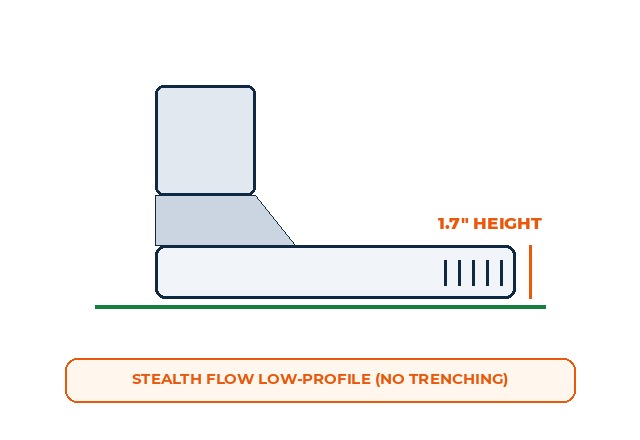
Amerimax Stealth Flow Kit
Ultra-flat 1.7-inch resin channel hides seamlessly beneath 2 inches of bark mulch with zero deep trench digging.
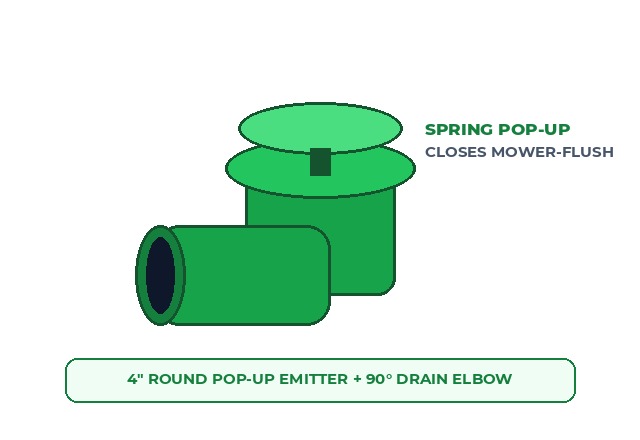
NDS Shallow Catch + Pop-Up
Buried catch-basin diffuser transitions roof water past flowerbeds directly to a flush turf pop-up spring lid.
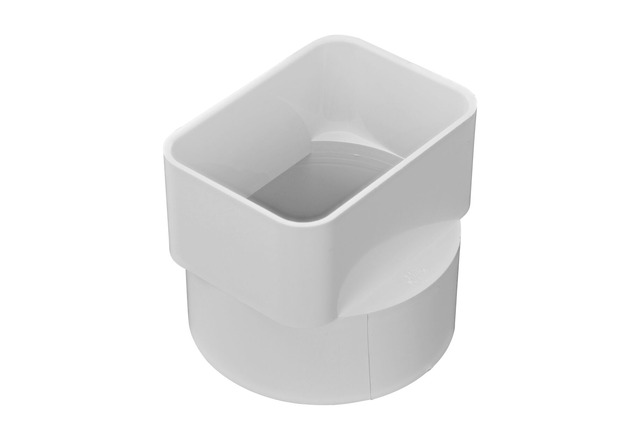
Zip Hinge + Alum. Extender
Aluminum hinge mounts directly onto existing 2″x3″ or 3″x4″ elbows so tails flip cleanly upright.
Bottom Line: Best Low-Profile Option for Your Yard
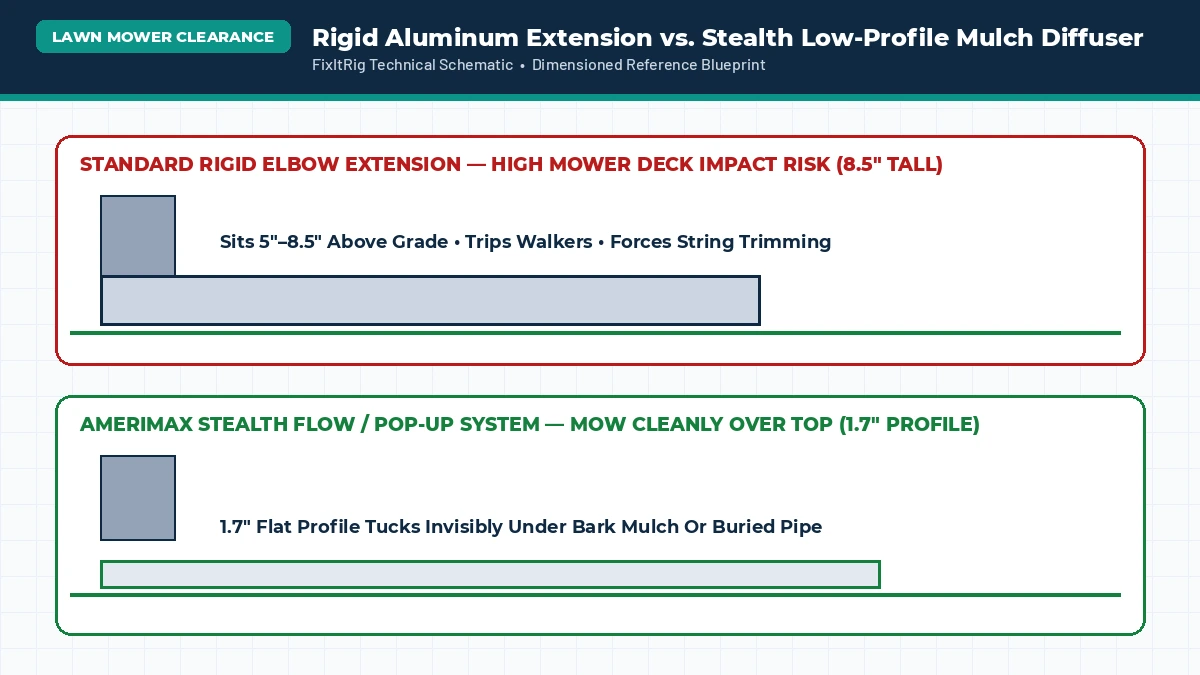
For flowerbeds wrapped around house foundations, the Amerimax Stealth Flow disappears invisibly under 2 inches of pine straw or dark bark mulch in 20 minutes without touching a post-hole digger. For open grass lawns where heavy riding mowers cross daily, bury a shallow NDS Catch Basin + 4″ Pop-Up Emitter so zero plastic ever sits above soil grade.
Full 5-Product Yard Extension & Clearance Matrix
| Extension / Drain Model | Profile Height Above Soil | Downspout Size Fit | Digging Depth Required | Max Flow Rating | Editorial Score | Check Price |
|---|---|---|---|---|---|---|
| Amerimax Stealth Flow Kit | 1.7″ Under Bark Mulch | Fits 2″x3″ & 3″x4″ Universal | 0″ (Rake Surface Mulch) | 380 GPM Channel | 9.5 / 10 | Check Amazon |
| NDS Shallow Basin + Pop-Up | 0.0″ Totally Buried Flush | Needs NDS 9P06 / 9P07 Sleeve | 4″ to 8″ Turf Trench | 620 GPM Pipe | 9.4 / 10 | Check Amazon |
| Zip Hinge Stainless Clasp | Flips Vertical to 0″ On Mowing | 2″x3″ and 3″x4″ Metal Elbows | 0″ (Clips Onto Existing Tail) | Full Spout (550 GPM) | 9.1 / 10 | Check Amazon |
| Frost King Automatic Roll-Out | 0.1″ Flat When Unrolled / Stows | Slips Over 2″x3″ & 3″x4″ | 0″ (Zip-Tie Collar) | 220 GPM (Moderate) | 8.2 / 10 | Check Amazon |
| Invisaflow Adjustable Diverter | 1.9″ Flat Polymer Tray | 2″x3″ and 3″x4″ Snaps | 0″ (Surface Landscape Grade) | 340 GPM Open Diffuser | 8.6 / 10 | Check Amazon |
Why Clearing Your 5-Foot Foundation Backfill Zone Is Non-Negotiable
When builders excavate a house basement or crawlspace footer, they dig an outer perimeter trench roughly 4 to 5 feet wider than the finished concrete wall—and later push loose disturbed dirt back into that cavity. Even decades later, that backfill halo acts like a giant sponge compared to hard undisturbed surrounding clay. Dropping roof runoff through a short 24-inch concrete splash block pours storm surges straight down into loose foundation backfill, pushing groundwater straight toward basement wall cracks and sump pumps.
Every low-profile extension or buried pipe run should therefore carry roof runoff at least 6 to 10 feet away from siding onto positively sloped yard ground—and match your home’s total roof drainage GPM calculated via our Gutter Rainfall Capacity Calculator.
Detailed Field Notes: Strength & Failure Modes of Each Extension
Amerimax Stealth Flow (9.5/10) — Best No-Trench Flowerbed Disguise
Amerimax’s Stealth Flow replaces bulky 4-inch corrugated black hoses with an ultra-shallow 1.7-inch high by 7.5-inch wide matte PVC chute connected through an angled adjustable transition elbow. In our lawn trials, raking two inches of dark hardwood mulch cleanly over top hid 100% of the pipe without starving shrubs of soil oxygen, while its fan-slotted terminal chamber dissipated 60 GPM bursts softly so soil didn’t wash bare trenches across front turf. Note one maintenance check: because the chute sits flat at 1.7 inches tall, keep heavy wet maple leaves out of upper gutters (pair with stainless micro-mesh guards) or rinse the lower elbow cap each November.
NDS Low-Profile Catch Basin + 4″ Pop-Up Emitter (9.4/10) — Best True Lawn Solution
Even a 1.7-inch plastic chute shouldn’t be run over directly by heavy 700-lb zero-turn mower decks on bare grass. Instead, where your extension exits landscaped mulch onto open lawn turf, transition into a shallow buried NDS Low-Profile Catch Basin linked to rigid 4″ SDR-35 PVC pipe ending at an NDS spring pop-up emitter. The catch basin’s minimal 4-inch digging depth avoids deep utility cables while routing storm floods cleanly underground where tractor blades pass harmlessly above.
Zip Hinge Aluminum Hinge + Rigid Spout (9.1/10) — Best Freeze-Proof High-Flow Option
Sometimes low-tech aluminum hardware beats flat plastic trays—especially in brutal northern winters where thin surface water freezes solid inside shallow flat chutes. Zip Hinge replaces static bottom elbow screws with a heavy stainless spring clasp that locks standard rigid 2″x3″ or 3″x4″ aluminum tails tightly upright against your siding when mowing or clearing snow, then swings smoothly back down during rainstorms. It looks industrial, yes, but moves a full 550 GPM unimpeded through oversized 3″x4″ downspouts and never cracks under freezing sub-zero sleet.
Frost King Automatic Roll-Out — Budget Caution Note
Green perforated roll-out sleeves uncurl under water weight and coil neatly back beside the wall after storms—sounding genius until brittle vinyl pleats trap icy winter rain and stiffen half-open, tearing under mower blades on spring cuts. Reserve roll-out sleeves strictly for mild temporary garage corners with light roof runoff, never heavy two-story main valleys.

Low-Profile Extension Benefits
- Eliminates broken black corrugated accordion pipes crushed by lawnmowers
- Conceals downspout discharges naturally under 2″ bark mulch or turf grade
- Protects basement walls by extending runoff 6–10 ft past foundation backfill
Tradeoffs & Winter Cautions
- Shallow flat 1.7″ chutes collect packed wet oak leaves faster if upper gutters lack guards
- Standing water inside un-pitched flat extensions can freeze solid in northern snowbelts
- Heavy zero-turn riders should stick strictly to buried 4″ SDR-35 + flush Pop-Up caps
Landscape Slope Grading, River Rock Diffusers & Seasonal Maintenance
Even the sleekest low-profile extension eventually floods your mulch bed or erodes a muddy ditch across lawn grass if soil slope pitches back toward the house or stormwater strikes bare dirt at 45+ GPM. Protect landscaping cleanly with three pro site-prep habits:
- Add a River Rock Washout Pad Under Open Diffusers: Place a 24-inch fan of 2-to-3-inch smooth Mexican river cobbles over black woven weed barrier cloth directly at the slotted exit of an Amerimax Stealth Flow tray. Heavy river stones shatter peak cloudburst velocity harmlessly without floating away like lightweight hardwood bark mulch during summer storms.
- Verify Positive Soil Fall (6 Inches Over 10 Feet): Residential building standards (IRC Section R401.3) require finished landscape soil around house walls to slope away at 6 inches of drop within the first 10 feet (5% grade). Whenever old flowerbeds settle flat beneath settled mulch layers, rake clean topsoil against brick courses beneath plastic weed barriers BEFORE laying flat PVC extenders on top.
- Inspect Discharge Mouths Twice Per Year: In late November after oaks finish shedding and late May following spring blossoms, pop open the front diffuser cap or slip off the bottom adapter sleeve for 15 seconds to shake out accumulated shingle granules, pine cones, or burrowing chipmunk bedding. Keeping overhead gutters clean with ground wands prevents mud dams before they ever wash downward.
Fast 20-Minute Installation Rules (Zero Pooling or Leaks)
- Cut Downspout Stub Height Cleanly Above Grade: Measure vertical spout length accurately and saw off excess metal so the low-profile elbow neck rests firmly on compacted soil rather than hanging crookedly mid-air.
- Grade a Continuous 1/4″ Fall Away From Siding: Never allow an extension nose to pitch backward toward basement brick! Tamp soil firmly underneath the middle section so water runs briskly toward the fan diffuser end.
- Fasten Transition Collars Securely: Lock Stealth Flow upper collars onto metal 2″x3″ or 3″x4″ tubes using two short #8 stainless zip screws on opposite sidewalls—otherwise a strong 50 GPM summer cloudburst can blow unfastened plastic elbows off metal spouts!
Matching Extension Flow to Roof GPM & Concrete Walkway Crossovers
Before installing surface low-profile extenders across entire perimeter corners, verify one critical hydraulic bottleneck: thin flat chutes hold roughly 340 to 380 GPM maximum flow under unobstructed open discharge slopes. That handles 95% of residential single-spout roofs up to 1,200 square feet comfortably, yet combining two roof valleys into one steep corner outlet feeding 60+ GPM requires stepping carefully to ensure smooth exit pitch. Verify total section runoff first inside our Gutter & Downspout Capacity Calculator.
What If a Concrete Sidewalk Blocks Your Downspout Path? Whenever a concrete porch path or side driveway separates your downspout corner from open yard turf, never run exposed flat black plastic tubes across pedestrian steps where wet rubber poses serious slip-and-fall hazards or frost forms icy ridges! Instead, tunnel straight underneath the concrete walk safely using a galvanized pipe water-jet boring lance attached to a standard garden hose—pushing a solid sleeve of 4″ Schedule 40 PVC cleanly across under the slab to reconnect on the grass side to an NDS spring Pop-Up emitter.
Protecting Painted Siding Splash Zones & Trim Details
Another overlooked advantage of swapping noisy vertical kick-out elbows for quiet ground-hugging channels is preventing splash erosion along delicate wood trim, lower fiber-cement Hardy planks, and painted porch skirt boards. Standard hinged elbows hanging eight inches above patio pavers spray dirty water mist onto lower siding boards during every summer thunderstorm, feeding premature algae discoloration and basement rim-joist rot. By transitioning smoothly inside flush adapter necks right at grade, falling water stays entirely enclosed until releasing calmly across river cobble eight feet outside foundation splash lines.
Whenever tightening straps beside masonry brick veneer or vinyl J-channels, keep at least half an inch of clean thermal expansion air gap behind plastic channels so summer midday sun doesn’t buckle dark colored PVC trays against foundation walls.
Frequently Asked Questions
Can I paint white Amerimax Stealth Flow tubes to match cedar bark or tan brick?
Yes—lightly scuff the matte PVC outer shell with a fine gray Scotch-Brite pad, wipe clean with rubbing alcohol, and spray one thin mist coat of Krylon Fusion All-In-One Matte Espresso Brown or Textured Brownstone so exposed elbow transitions disappear visually beside dark foundation corners.
Can I run a lawnmower directly over an Amerimax Stealth Flow cover?
Only when buried cleanly inside a protective soil trench—never drive sharp mower blades directly over exposed flat PVC trays sitting above hard soil. On manicured lawn turf outside mulch beds, transition into buried 4″ pipe and a flush NDS Pop-Up cap.
Will the Amerimax Stealth Flow work on larger 3″x4″ downspouts?
Yes. The universal upper elbow adapter incorporates trimmed step-downs supporting both residential 2″x3″ and heavy 3″x4″ aluminum spouts out of the box.
Do flat extensions clog up with leaves faster than open corrugated pipes?
Yes—any flattened hydraulic opening traps large twigs more readily than an open 4-inch round tube. Keep trees trimmed back, add Type 304 stainless micro-mesh gutter guards overhead, or rinse out the snap-open diffuser head once each autumn.
What happens if a flat surface extender freezes solid in winter?
Because water pours smoothly out through the open slotted front diffuser without forming a trapped vertical belly loop, well-sloped low-profile extensions drain dry quickly after daytime snowmelts—far less likely to crack than corrugated loops resting flat on frozen clay.
Can I connect two Stealth Flow kits together for a 10-foot run?
Yes—Amerimax sells 24-inch rigid straight low-profile channel extension sticks plus 45-degree flat elbows specifically to reach 8 to 12 feet past wide landscaped shrub beds.
Why do accordion-style black plastic flexible extenders always fail within two years?
Thin corrugated ridges trap rotting mulch compost inside dozens of pleats, brittle UV black polymer cracks whenever string trimmers brush against it, and high summer storms pop slip-on collars loose onto sidewalks.