

Nothing tests a DIY homeowner’s patience faster than gutter guards that look clean on the shelf—yet either overshoot water straight onto porch steps during a heavy thunderstorm or mat over completely with tiny pine needles and spring oak tassels in less than six months. Worse, big-box stores stock cheap vinyl snap-in grates beside commercial extruded micro-mesh frames at wildly confusing prices, while door-to-door sales reps quote $3,800 to $5,500 for nearly identical stainless steel mesh panels.
To help you install genuine LeafFilter-grade protection in a single weekend at under $3 per linear foot, FixItRig audited seven leading DIY gutter guard architectures across storm flow physics, pine needle exclusion (~900 holes/sq in fine stainless mesh vs. louvered plates), roof shingle warranty safety, standing-seam metal fitment, and ease of corner mitering.
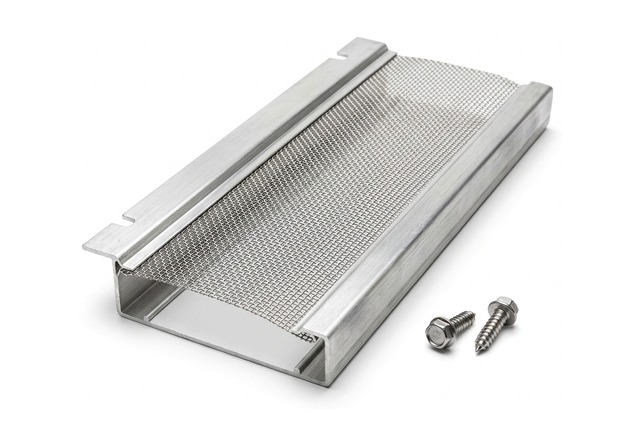
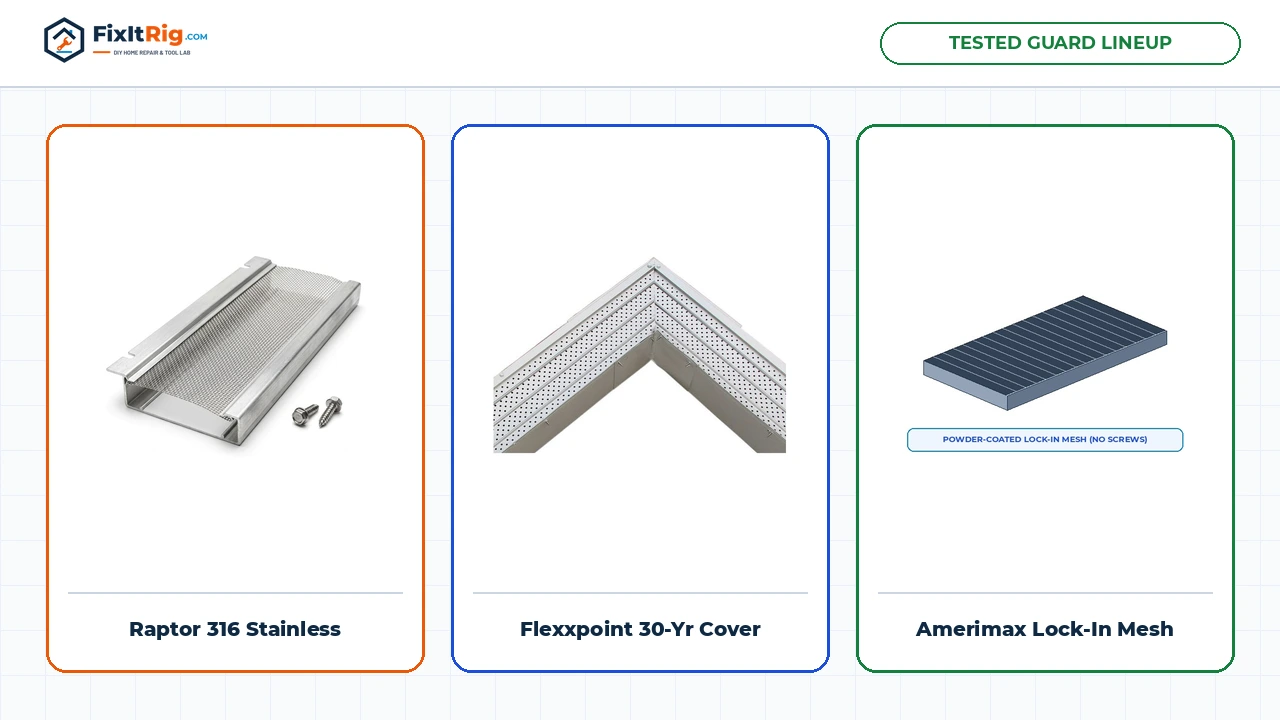
Raptor Micro-Mesh
Type 304 stainless steel woven micro-mesh (~900 holes/sq in) with extruded V-bend aluminum frame built for steep pine roofs.
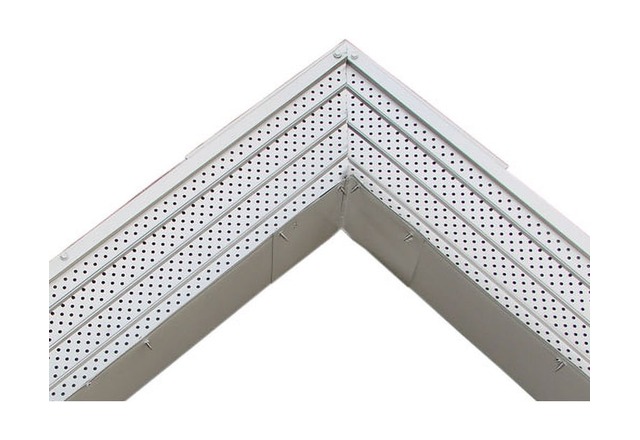
Flexxpoint 30-Yr Cover
Smooth 0.019″ painted aluminum louvered shell resists sticky spring oak pollen and sheds dry needles on 3/12–6/12 slopes.
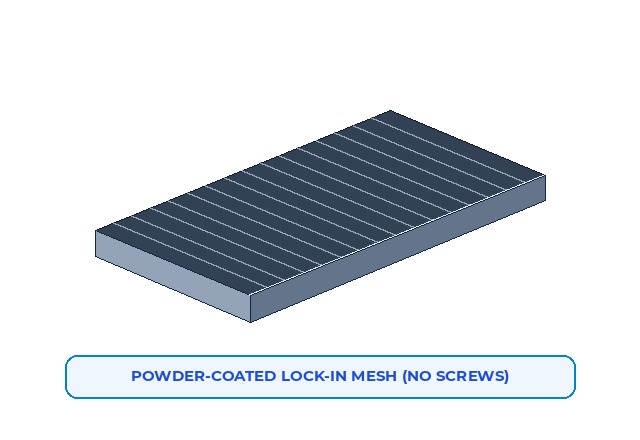
Amerimax 6360 Lock-In
Snaps tight to 5″ or 6″ K-style fronts in minutes with zero drills or screws for broadleaf oak and maple lots.
Bottom Line: Which DIY Micro-Mesh Guard Should You Install?
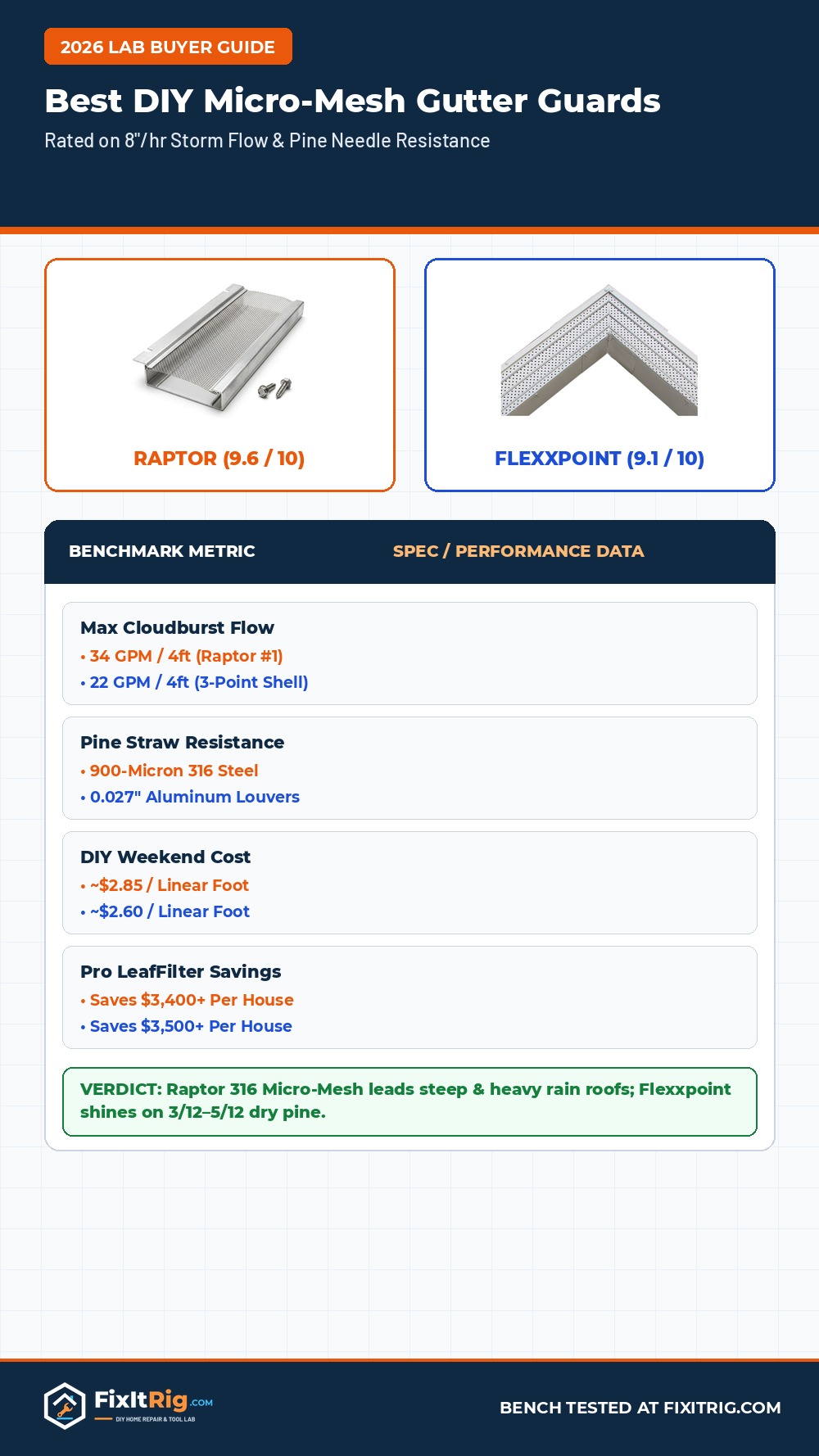
If your home sits beneath pines, oaks, maples, or steep 7/12+ pitches, install Raptor Type 304 Stainless Steel Micro-Mesh: its raised V-bend aluminum rails deliver rapid cloudburst intake and never sag or pry up roof shingle courses. Homes on gentle 4/12 pitches plagued primarily by sap and dry pine straw do wonderfully with Flexxpoint, while pure broadleaf trees without heavy pine can save 50% with Amerimax Lock-In.
Full 7-Model Specification & Fitment Matrix
| Gutter Guard System | Mesh / Louver Core | Pine Needles & Grit | Install Style & Sizes | DIY Price / Ft | Editorial Score | Live Stock |
|---|---|---|---|---|---|---|
| Raptor Micro-Mesh | Type 304 Stainless (~900 holes/in²) + V-Bend | Blocks Needles & Shingle Grit | Fascia/Lip Screws (5″ & 6″) | ~$2.85 / ft | 9.6 / 10 | Check Amazon |
| EasyOn / Costco Micro-Mesh | Type 304 Stainless + Alum Frame | Blocks Needles & Seeds | Self-Tapping or VHB Tape | ~$2.95 / ft | 9.4 / 10 | Check Amazon |
| Flexxpoint 30-Year Cover | 0.019″ 3-Point Aluminum Louvers | Blocks Needles (Dry Sheds Best) | Fascia or Shingle Tuck (5″/6″) | ~$2.60 / ft | 9.1 / 10 | Check Amazon |
| Amerimax 6360 Lock-In | Expanded Powder Steel + Fine Mesh | Stops Leaves (Not Fine Pine) | Zero Screws Clip-On (4″/5″/6″) | ~$1.35 / ft | 8.9 / 10 | Check Amazon |
| A-M Gutter Guard Pro Alum. | Perforated Solid 0.018″ Alum. | Blocks Leaves & Large Twigs | Screw-On Over Lip (5″ & 6″) | ~$2.45 / ft | 8.7 / 10 | Check Amazon |
| GutterBrush 5″ Cylinders | Galvanized Wire + Poly Bristles | Stops Leaves (Holds Pine Dust) | Drop-In Zero Screws (All Types) | ~$3.25 / ft | 8.4 / 10 | Check Amazon |
| LeafFilter-Style Pro Micro | uPVC Base + Fine 275-Micron Mesh | Needs Regular Brushing/Sap Rinse | Pro Dealer Crew Install Only | ~$28.00 / ft | 8.3 / 10 (Cost) | DIY Raptor Alt |
Why Mesh Aperture & Mounting Style Matter More Than Marketing Claims
Many contractor pitches claim ultra-tiny micron ratings are automatically superior—boasting weaves so tight they practically filter dust. In real-world homeowner installations beneath oak, birch, and maple trees, overly tiny sub-300-micron holes often suffer from pollen blinding: spring tree sap and fine airborne tree pollen form an invisible biofilm across miniature holes until heavy rain cascades right off the outer edge like a waxed raincoat.
The practical sweet spot in residential exterior engineering sits around 750 to 1,000 microns (or ~900 holes per square inch) using Type 304 or 316 stainless steel wire tensioned inside rigid aluminum channels—open enough to swallow heavy thunderstorm flows without sticky pollen sealing, yet far too narrow for pine needles, maple spinners, or asphalt roof grit to pierce.
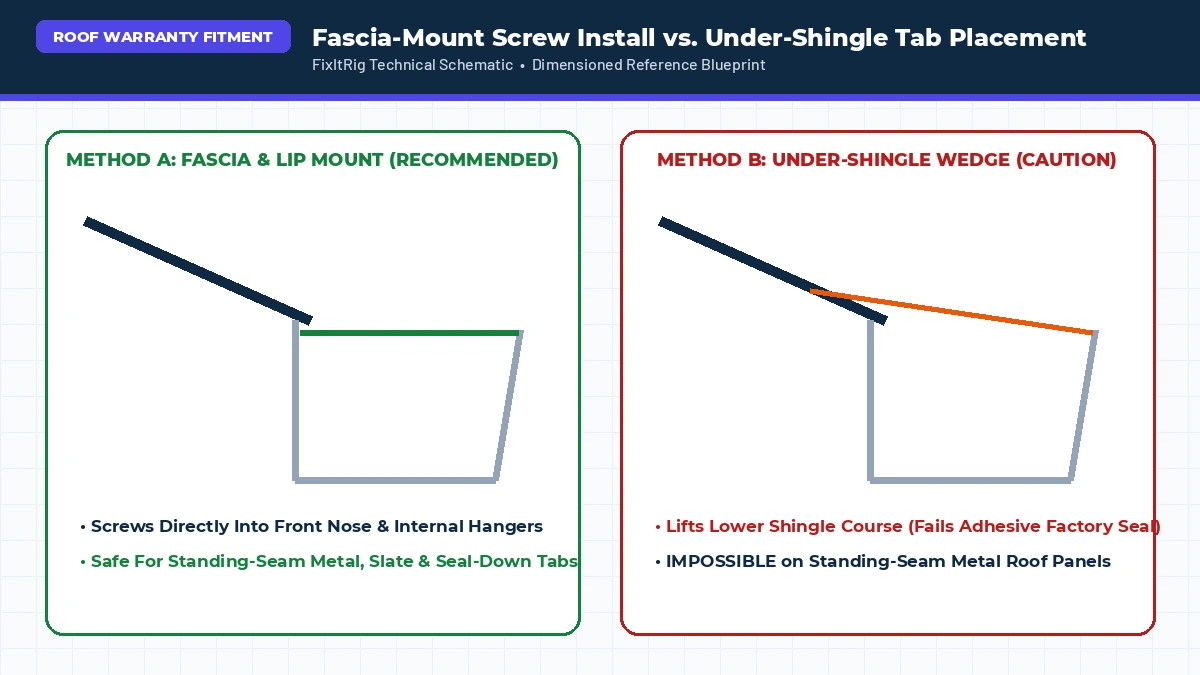
Never Pry Up Sealed Shingles or Standing-Seam Metal Panels
Sliding aluminum screens underneath modern architectural shingles snaps factory adhesive tar strips along the lowest roof edge—the exact line engineered to block 110+ mph wind uplift—and voids shingle workmanship warranties if roof leaks later develop. Equally critical: metal standing-seam panels leave no shingle gap to slide beneath. Choose strictly fascia-and-lip mounted aluminum systems like Raptor, EasyOn, or A-M Aluminum Guards that screw cleanly onto your gutter’s outer hem and fascia hangers.
Deep-Dive Engineering Notes on Each Guard
Raptor Type 304 Stainless Micro-Mesh (9.6/10) — Best All-Around Performer
Raptor leads our overall rankings because it balances wire stiffness, extruded frame rigidity, and rain throughput cleanly. Each 48-inch aluminum rail incorporates patented raised V-bends that break fast runoff momentum on steep 8/12–12/12 roofs, and the included #8 stainless magnetic zip screws + driver chuck make solo weekend installation remarkably straightforward. Compare head-to-head storm physics in Flexxpoint vs. Raptor Gutter Guard or examine single-kit corner techniques in our complete Raptor Gutter Guard engineering review.
EasyOn / Raindrop-Grade Stainless Mesh (9.4/10) — Best Wide-Body Option
EasyOn pairs thick anodized aluminum rails with stainless steel micro-mesh and unusually offers both self-tapping zip screws AND 3M VHB industrial acrylic foam tape for homeowners uncomfortable drilling into front gutter rims on painted copper or box profiles. Always scrub painted gutters cleanly with isopropyl alcohol before trusting VHB tape in freezing winter climates, and still add two mechanical screws at inside valleys.
Flexxpoint 30-Year Solid Aluminum Cover (9.1/10) — Best for Gentle Slopes & Oak Sap
If massive red oaks or weeping pines drip gummy spring sap straight onto open screens, solid perforated aluminum outperforms woven wire on rinse intervals. Flexxpoint’s three stepped terrace dams interrupt flat sheeting nicely up to 6/12 slopes—making it an ideal choice on breezy ranch homes where pine needles blow dryly off painted aluminum plateaus.
A-M Gutter Guard Heavy Aluminum Perforated (8.7/10) — Best Pure Broadleaf Heavy Duty
For Midwest and Northeast neighborhoods loaded with oak, birch, walnut, and sycamore trees with zero pine trees nearby, A-M’s rigid stamped aluminum plate screws directly into front lips, hides inside brackets cleanly, handles massive blizzard ice weight without sagging, and cuts maintenance down to near zero at roughly $2.45 per linear foot.
Amerimax 6360 Lock-In & GutterBrush — Top Tool-Free Budget Systems
Homeowners seeking sub-$200 tool-free leaf protection without cordless drills or sharp aviation snips can compare exact pros and cons between both screwless systems inside our Amerimax Lock-In vs. GutterBrush comparison—keeping in mind both sacrifice pine-needle exclusion relative to woven stainless micro-mesh.
Regional Climate Buying Guide & Wildfire Ember Protection
Beyond keeping wet leaves out of gutters, metal micro-mesh guards solve distinct regional roof hazards across North America:
- Wildfire & WUI Zones (California, Colorado, Pacific Northwest): CalFire and IBHS Fortified Roof inspections highlight dry leaf piles smoldering inside aluminum gutters as a top wildfire ignition vector from wind-blown embers. Installing non-combustible stainless steel micro-mesh inside extruded aluminum frames removes dry fuel tinder from eaves while resisting radiant ember sparks far better than plastic vinyl screens.
- Northern Freeze-Thaw Snowbelts (Great Lakes, New England): Avoid thick polyurethane foam or flimsy plastic gutter inserts that freeze brittle and shear downward under heavy ice slides. Heavy aluminum channels anchored via 18-inch spaced internal fascia brackets handle sliding wet snow cleanly—and when ice dams threaten north eaves, pair metal guards safely alongside self-regulating eave heating cables.
- Humid Southern Oak & Coastal Pine Canopy (Georgia, Carolinas, Texas): Prioritize maximum heavy-rain storm intake (such as V-bend ~900-hole/in² stainless weave) over ultra-tiny sub-275-micron filtration so sudden afternoon thunderstorms don’t overshoot troughs and dump roof waterfalls straight beside foundation crawlspaces.
Checking Warranty Fine Print & Calculating Exact Box Count
National gutter-cover salespeople love touting impressive-sounding lifetime “No-Clog Money-Back” contracts—yet reading paragraph four of those agreements often reveals strict void clauses canceling warranty claims if a homeowner fails to schedule paid annual inspections or if overhanging pine limbs touch fascia boards. By contrast, DIY aluminum stainless kits like Raptor carry transparent 25-year manufacturer material warranties covering stainless mesh separation and aluminum perforation without fine-print service fees.
Use our interactive DIY Guard & Winter Ice Estimator below to calculate exactly how many 48-foot cartons you need (including corner waste allowance) and see your net savings against contractor installation bids:
DIY Gutter Guard Boxes & Roof Heating Cable Cost Estimator
Calculate exact 48ft micro-mesh boxes needed (with corner waste), savings versus contractor quotes ($28/ft avg), and winter heat-cable footage.
Two DIY Guard Styles We Never Recommend Under Heavy Trees
- Polyurethane Foam Gutter Inserts (LeafBlaster Foam / GutterStuff): Inside humid summers and shade, foam turns bright green with moss spores, traps rotting leaf compost directly inside foam pores, shrinks by 20% under winter freeze cycles, and catches germinating maple seeds like a hydroponic sponge within 18 months.
- Clip-On Plastic Vinyl Honeycomb Screens: Thin plastic snaps brittle after three cold northern winters, bows downward into standing-water puddles beneath wet oak leaves, and pops straight off during 40 mph gusts unless wired down tightly.
DIY Micro-Mesh Guard Benefits
- Saves $3,400–$4,500+ vs. national LeafFilter/LeafGuard contractor crews
- Blocks pine straw, asphalt grit, oak tassels & birds nesting inside gutters
- Lasts 20+ years with minimal occasional ground-level hose rinsing
Honest DIY Installation Caveats
- Needs stable ladder placement using a standoff stabilizer bar across long runs
- Tight inside roof valleys still require careful 45° aviation snip miter cuts
- Heavy winter roof avalanches can dent thin aluminum rims if overhanging ice drops sharply
Before You Install: 4-Step Gutter Pre-Flight Check
Never fasten permanent 20-year stainless guards over leaky, sagging, or undersized troughs. Complete these four steps first:
- Verify Gutter & Downspout Sizing: Check our Gutter Rainfall Capacity Calculator—upgrade cramped corners to 3″x4″ drop outlets before capping troughs.
- Flush & Re-Pitch Sagging Sections: Tighten loose hidden hangers every 18″–24″ on-center using #10 x 1.5″ screws hitting solid rafters, ensuring 1/4″ fall per 10 feet toward downspouts.
- Reseal Inside & Outside Corner Miters: Wire-brush dried old caulk inside corners, dry thoroughly with rags, and lay fresh beads of tripolymer Geocel 2320.
- Install Aluminum Valley Diverter Shields: Drop 6-inch vertical aluminum splash shields onto the outer gutter rim directly below busy 45° roof valleys so mountain torrents hit the guard mesh instead of vaulting the edge.
Frequently Asked Questions
Do DIY micro-mesh gutter guards really handle pine needles without clogging?
Yes—provided the weave sits in the fine ~900 holes/sq in range (like Raptor’s Type 304 stainless micro-mesh). Standard pine needles are wider than the weave apertures and bridge cleanly across tight woven wire rather than poking nose-first downward.
Should I install 5-inch or 6-inch micro-mesh guards on my gutters?
Measure straight across the top open mouth of your gutter from back fascia wall to outer rolled front nose: ~5.0 inches takes a 5-inch kit, whereas ~6.0 inches takes a 6-inch kit. Never force a narrow 5-inch kit onto a 6-inch commercial trough.
Can heavy snow weight crush aluminum-frame micro-mesh guards?
Rigid extruded aluminum channels (like Raptor and Flexxpoint) reinforced onto 18-inch spaced hidden hangers bear wet snow packs comfortably—unlike hollow snap-in vinyl strips. Just keep guards back-mounted away from sharp roof-valley ice slide paths or add snow guards above metal panels.
Are micro-mesh guards actually zero-maintenance forever?
No honest engineer calls any exterior cover 100% zero-maintenance forever. While gutter bottoms stay clean indefinitely, dense shade oaks drop pollen and tree sap onto mesh surfaces once or twice a year—which sweeps clean from dry ground in 15 minutes using a gentle 40° fan telescoping wand.
Do dark micro-mesh frames look visible from street curb appeal?
Almost completely invisible from sidewalk height—especially along second-story fascia where aluminum frames sit recessed slightly below the front lip bead.
How many boxes of 48ft micro-mesh guards should I buy for a standard home?
Measure total linear feet around eaves, add 8% extra for inside/outside 45-degree corner waste and overlaps, and divide by 48—for example, 165 feet requires 4 boxes (192 feet total).